 stanposs@attictofoundation.net
 (770) 601-6799
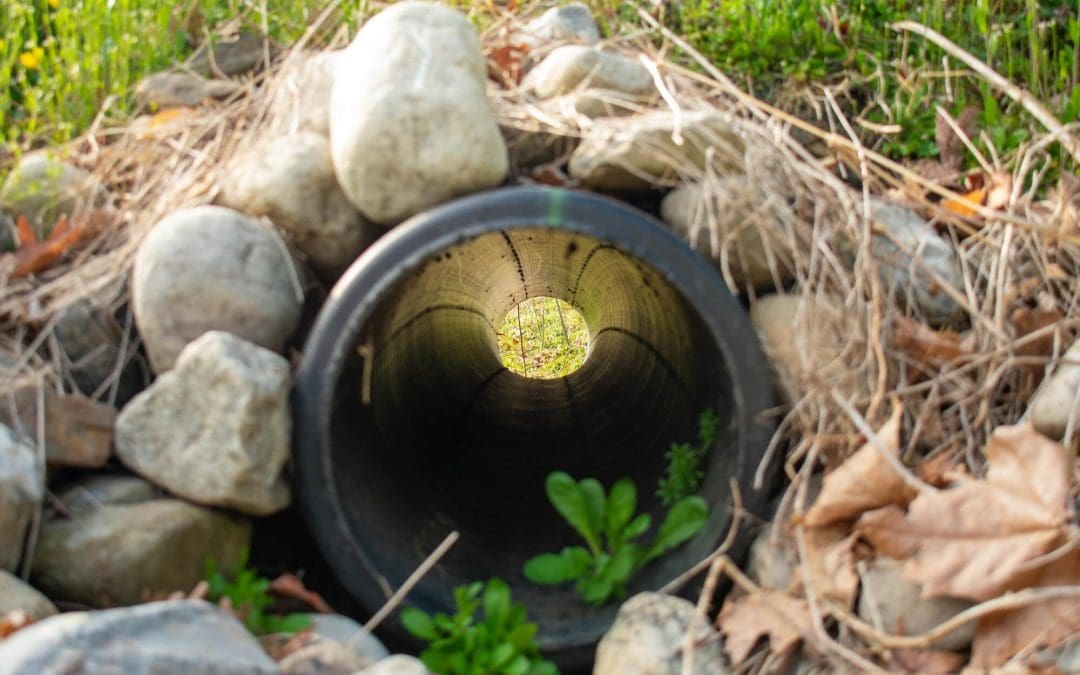
Poor drainage doesn’t announce itself as dramatically as a roof leak or a burst pipe, but its consequences are equally serious: foundation moisture intrusion, saturated lawn areas that never dry out, basement flooding during heavy rain, and the accelerated deterioration of hardscape and landscaping. Understanding how to improve drainage begins with identifying where water is accumulating, why it’s accumulating there, and which intervention most effectively addresses that specific condition. The solutions range from simple and inexpensive to more involved, but in almost every case they cost significantly less than the damage that poor drainage produces when left unresolved.
Grading and Slope: The First Place to Improve Drainage
The most fundamental drainage principle is that water follows gravity, and the grade of the ground surrounding the home determines where gravity takes it. A home whose grade slopes toward the foundation rather than away from it is directing every rain event toward the single most critical structural element on the property. The standard recommendation is a minimum slope of six inches over the first ten feet adjacent to the foundation, enough gradient to move water away from the structure and toward the yard or a designated drainage area. Correcting inadequate or negative grade is the intervention with the most direct impact on foundation and basement moisture conditions. It typically involves adding and compacting soil against the foundation to restore the appropriate slope, a task within DIY capability in most cases that produces immediate improvement in how water moves away from the structure.
Engineering Solutions to Improve Drainage
When surface grading alone isn’t sufficient to improve drainage subsurface and channeled drainage solutions address the conditions that grade correction can’t. A French drain, a perforated pipe buried in a gravel-filled trench, intercepts subsurface water and redirects it to a discharge point away from the problem area. French drains are the solution most commonly used to address persistently wet lawn areas, basement wall moisture, and water accumulation at the base of slopes. A swale, a shallow, vegetated channel designed to direct surface water across a property, is the feature most appropriate for managing larger volumes of surface runoff across open yard areas. Unlike a French drain, a swale works above the surface and can be designed to be both functional and attractively landscaped.
Downspouts and Hardscape: The Details Most Homeowners Overlook
The roof drainage system, gutters and downspouts, is the drainage component most homeowners overlook because it’s considered part of the home rather than part of the site. A downspout that discharges directly against the foundation or into a low area that doesn’t drain is depositing the entire roof’s collected rainfall at the worst possible location on the property. Extending downspouts to discharge at least six feet from the foundation most directly reduces the concentrated water load at the base of the wall. Permeable hardscape, like gravel driveways, permeable pavers, and porous concrete alternatives, is the drainage approach that addresses runoff from impermeable surfaces by allowing water to infiltrate the ground rather than sheet across it and accumulate at low points.
Frequently Asked Questions (FAQs)
How do I know if I need to improve drainage or if water accumulation is normal?
Standing water that remains more than 24 to 48 hours after rain stops, water that consistently accumulates in the same location after every rain event, and lawn areas that never fully dry out between rain events all indicate a drainage problem. Basement moisture or wall seepage that correlates with rainfall is the most serious indicator; it signals that surface water is reaching the foundation rather than being directed away, which is the condition that most warrants a deliberate effort to improve drainage.
Can I improve drainage myself or does it require a professional?
Grade correction, downspout extensions, and surface swale construction are within DIY capability for most homeowners; they require physical effort rather than specialized skills. French drain installation is more complex and benefits from professional involvement, particularly when the drain needs to tie into an existing system or when the discharge point requires careful engineering to prevent creating a new problem at the outlet.
How does poor drainage affect a home’s foundation?
Water accumulating against the foundation creates hydrostatic pressure that causes cracking, inward bowing, and moisture intrusion over time. Efforts to improve drainage around the foundation are among the most direct investments a homeowner can make in long-term structural integrity. The cost of grade correction or a French drain is a fraction of the foundation repair that deferred drainage attention eventually produces.
How do downspout extensions help improve drainage?
A downspout discharging at the foundation deposits the concentrated runoff from the entire roof surface against the foundation wall. Extending it to discharge at least six feet away, through buried pipe or a surface extension, distributes that water load away from the structure. This drainage modification is among the least expensive available and among the most impactful for homes where foundation moisture is a concern.
Attic to Foundation provides home inspection services to the greater Atlanta area. Contact us to request an inspection.